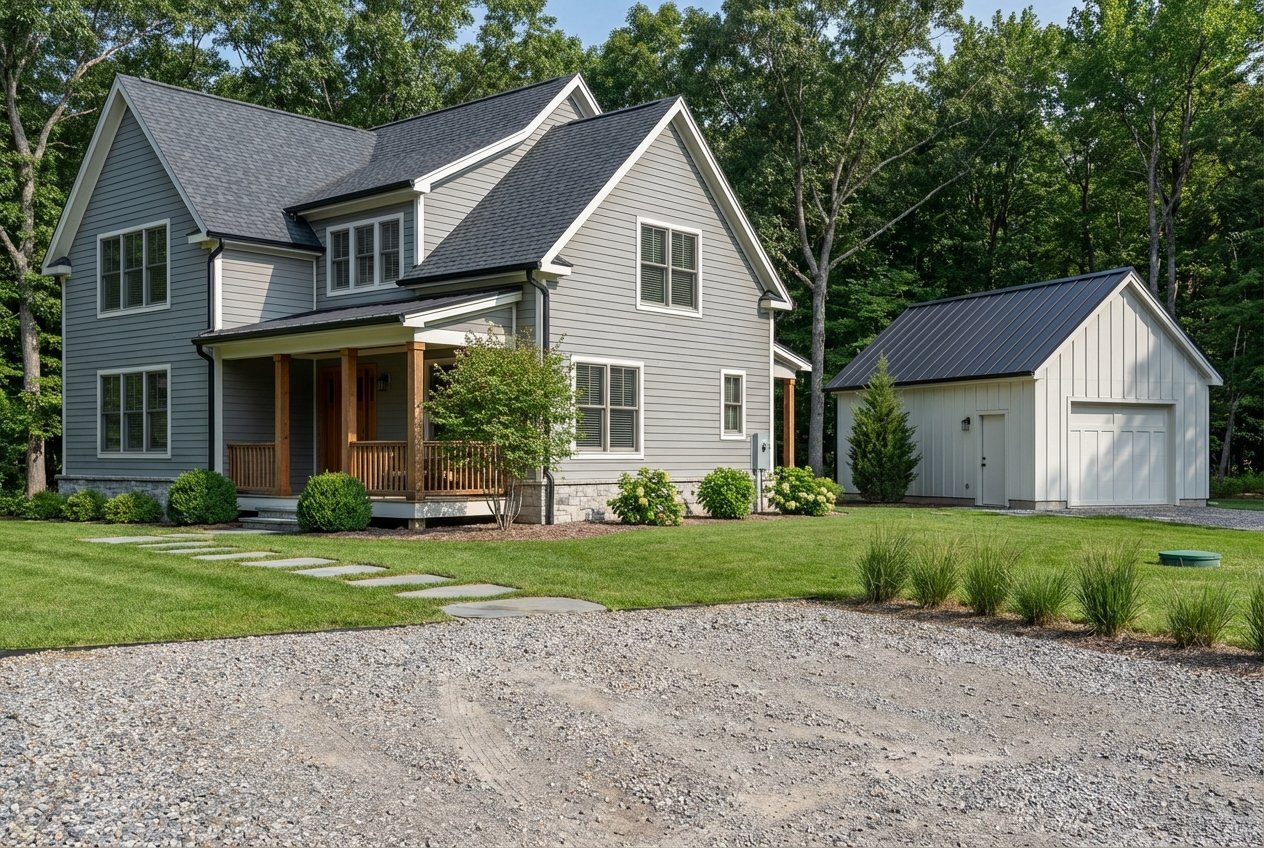
Thinking about trading the suburbs for more land, quiet nights, and room for hobbies in rural Penn Township in Cumberland County? You’re not alone. Buying in a country setting brings a different checklist than a typical suburban purchase, especially around water, wastewater, utilities, and permitting. This guide breaks down what to expect so you can plan your timeline, budget smartly, and move with confidence. Let’s dive in.
What’s different about rural Penn Township
Penn Township sits in west-central Cumberland County, stretching from valley farmland to the south-mountain slopes near waterways like Yellow Breeches Creek. The township is proudly rural, with many properties on larger lots and a mix of homes, barns, and accessory buildings. For schools and taxes, most of the township falls within the Big Spring School District.
The biggest change you’ll notice as a buyer is that many homes rely on private wells and individual septic systems rather than public water and sewer. Permits for any new construction or lot changes run through the township, and some projects also need county and state sign-offs. It’s a great lifestyle if you plan ahead for the unique steps.
Water and septic: the big two
Private well testing: what to order
Plan a full well evaluation during inspections. The Pennsylvania Department of Health recommends regular private well testing and outlines common parameters. As a baseline, you should test for total coliform bacteria, E. coli, and nitrate, and consider adding metals or emerging contaminants like lead, arsenic, or PFAS based on local risks. Work with a certified lab and follow their sampling steps to get accurate results. You can review state guidance and resources in the Department of Health’s overview of private well water testing.
A field check of well performance is just as important. Ask your inspector or well professional to evaluate pump function and yield so you know the system can supply your household’s needs.
Septic inspections and the township SEO
Expect a septic inspection as a contract contingency. A thorough review typically includes pumping the tank, checking baffles and lids, evaluating flow, and probing the drainfield when practical. In Penn Township, the Sewage Enforcement Officer (SEO) is the local authority for on-lot systems and handles percolation tests and deep probes before a design or permit is issued. The SEO also coordinates any required planning module submissions. Review township guidance and contacts on Penn Township’s permits page.
If you’re considering future upgrades or an addition, ask the SEO about system capacity and the designated replacement area. Having the right records now can save you time later.
The 10-acre exemption, in plain English
You may hear about a “10-acre exemption” for on-lot sewage. It exists in limited circumstances, but it is not automatic. Local ordinances and state DEP rules still apply, and you should confirm details with the SEO and DEP before you rely on any exemption. For context, see the Pennsylvania Bulletin’s discussion of the 10-acre permit exemption framework.
Lenders, appraisals, and rural systems
If you’re using FHA, VA, USDA, or many conventional loans, your lender will expect safe, functional water and wastewater systems. FHA’s Minimum Property Requirements call for potable water that meets local or EPA standards, adequate flow, and proper separation distances between wells and septic components. Appraisers will note any visible issues, and your lender may require written test results or certifications before closing. Review the FHA guidance in HUD Handbook 4000.1 and talk with your lender early about property-specific requirements.
Permits, timelines, and fees to expect
Basic municipal process
If you plan to build, add an outbuilding, or subdivide, Penn Township follows a step-by-step process. For new construction or land development, approvals generally run in sequence: septic approval from the SEO, county and township planning reviews (when a subdivision or land development is involved), a driveway permit, then a building/land-use permit with Uniform Construction Code (UCC) inspections. The township outlines the flow and contacts on the Planning & Permits page.
Typical township fees
Budget for township application fees, which are posted by the township and subject to change. Current examples include:
- Sewage application fee: $330 per lot, plus $250 when the septic permit is issued.
- Driveway permit: $40 (township roads; PennDOT approval is required for state roads).
- Building/Land Use permit: $60 for residential or agricultural structures.
Always confirm the latest amounts and whether your project requires additional reviews.
Stormwater rules and soil disturbance
If your project will disturb more than 1,000 square feet of soil, you will need erosion controls and may need a Stormwater Management Plan. The township notes these requirements on the permits page. Factor any engineering and review time into your schedule.
Sewage planning modules: the timeline
When a new on-lot system requires a Sewage Planning Module, it goes through the County Planning Department, the Township Planning Commission, and the Pennsylvania DEP. The township notes that DEP review typically takes about 60 to 90 days after submittal. If your purchase depends on a new system, build this window into your contract and closing timeline.
Access, outbuildings, and utilities
Driveways and PennDOT
Properties that access township roads need a township driveway permit; access onto state routes requires PennDOT approval. In rural areas, driveway design can affect budget and timing, especially if you need a culvert, improved sight distance, or surfacing to handle heavy vehicles. The township outlines driveway permitting on its Planning & Permits page.
Outbuildings, barns, and agricultural structures
Many rural properties include barns, pole buildings, workshops, or sheds. In Penn Township, accessory and agricultural structures fall under local building/land-use permitting and the statewide UCC where applicable. If a structure is used for a business or as living space, extra permits and code requirements can apply. Ask the seller for permit records and verify them with the township during due diligence. Start with the township’s permitting guidance.
Power, internet, and phone
For utilities, the township lists common providers: electric service through PPL, phone/landline via CenturyLink, and cable options including Zito Media and Comcast/Xfinity in some areas. Availability varies by address, so confirm service before you commit. See contacts and basics on the Penn Township utilities page.
Broadband reality check
Rural broadband can range from cable or DSL in wired areas to fixed wireless or satellite elsewhere. If you work from home, check address-level service and whether the property is in a grant-eligible area using the Pennsylvania mapping tools highlighted by PSU Extension and partners. Review the regional toolkit of Pennsylvania broadband mapping resources.
Insurance, emergency services, and risk checks
Fire protection and premiums
Penn Township is served by volunteer fire and local EMS. Insurers often consider distance to the nearest station, water supply, and hydrant access when pricing policies for rural homes. Before you bind insurance, ask your carrier how your specific address will be rated. You can find local contacts on the township’s Emergency Services page.
Floodplains and FEMA maps
Parts of the township lie near creeks and low-lying areas. Before you buy, check whether the property is in a FEMA Special Flood Hazard Area and whether an elevation certificate or flood insurance might be required for your loan. The township points buyers to FEMA maps from its Planning & Permits page. Your insurance agent can help you estimate premiums based on the map zone and home elevation.
Conservation easements and farmland preservation
Cumberland County participates in farmland preservation, and some parcels may have conservation easements or deed restrictions that affect how you can use the land. Always review title records for easements and consult the county’s overview of Agriculture & Land programs to understand preservation frameworks that may apply.
Environmental records checks
If the property has a history of non-residential use, ask for standard environmental searches. You can check Pennsylvania DEP records for brownfields or site remediation activity and review federal listings for legacy Superfund sites. Your title company or an environmental professional can help you order reports.
Your rural due diligence checklist
Use this list to keep your offer and inspections on track:
- Title search and easement review, including any conservation or access restrictions.
- Full home inspection by a pro who understands rural components and outbuildings.
- Septic: SEO file review, pump and inspect the tank, evaluate the drainfield, and confirm any DEP or planning module records. Build 60 to 90 days into your plan if a new system or module is required.
- Well: performance check and certified lab testing for bacteria, E. coli, and nitrate, plus metals or PFAS as indicated. See state guidance on private well testing.
- Radon test. The EPA advises testing all homes; Pennsylvania includes many higher-risk zones. Learn more from the EPA’s radon map guidance.
- Wood-destroying insect inspection for homes and outbuildings.
- Driveway/access evaluation: culverts, sight distance, winter access, and any PennDOT needs for state-road entrances. Review the township’s permitting page.
- Utility checks with providers at the exact address for electric, cable, and broadband. See the township’s utilities page and verify coverage using state broadband mapping tools.
- Lender coordination: confirm FHA/VA/USDA or conventional requirements for wells and septic. Review FHA MPRs in HUD Handbook 4000.1 and follow your lender’s testing and documentation requests.
Buying rural is rewarding when you know the steps. With the right tests, clear timelines, and good records, you can enjoy the space and freedom you’re after while protecting your investment. If you’d like a friendly, practical walkthrough of how to structure contingencies, line up inspections, and keep your closing on schedule, reach out to Katrina Siffrinn.
FAQs
Will a private well or septic stop me from getting a mortgage in Penn Township?
- Not usually; many lenders, including FHA, VA, and USDA, finance homes with wells and septic if water is potable and the wastewater system is functional and properly sited. Expect testing or certifications per lender guidelines and the FHA MPRs in HUD 4000.1.
How long do permits take if I want to subdivide or build in Penn Township?
- Plan for sequential township and county reviews, and if a new septic planning module is needed, DEP often takes about 60 to 90 days after submittal. See the township’s Planning & Permits overview.
Are well and septic repairs common or expensive on rural Cumberland County homes?
- They do occur, and costs vary widely by soil, topography, and access. Protect yourself with a full septic inspection, a well performance check, lab testing, and at least one estimate if issues are flagged.
Should I expect normal farm activity near rural homes in Penn Township?
- Yes. Pennsylvania’s Right-to-Farm protections support normal agricultural operations, and some properties or neighbors may be in preserved agricultural programs. Review deed records and the county’s Agriculture & Land information.
What school district serves most of Penn Township, Cumberland County?
- Most of the township is served by Big Spring School District. Confirm the assigned district and schools for a specific address during due diligence.