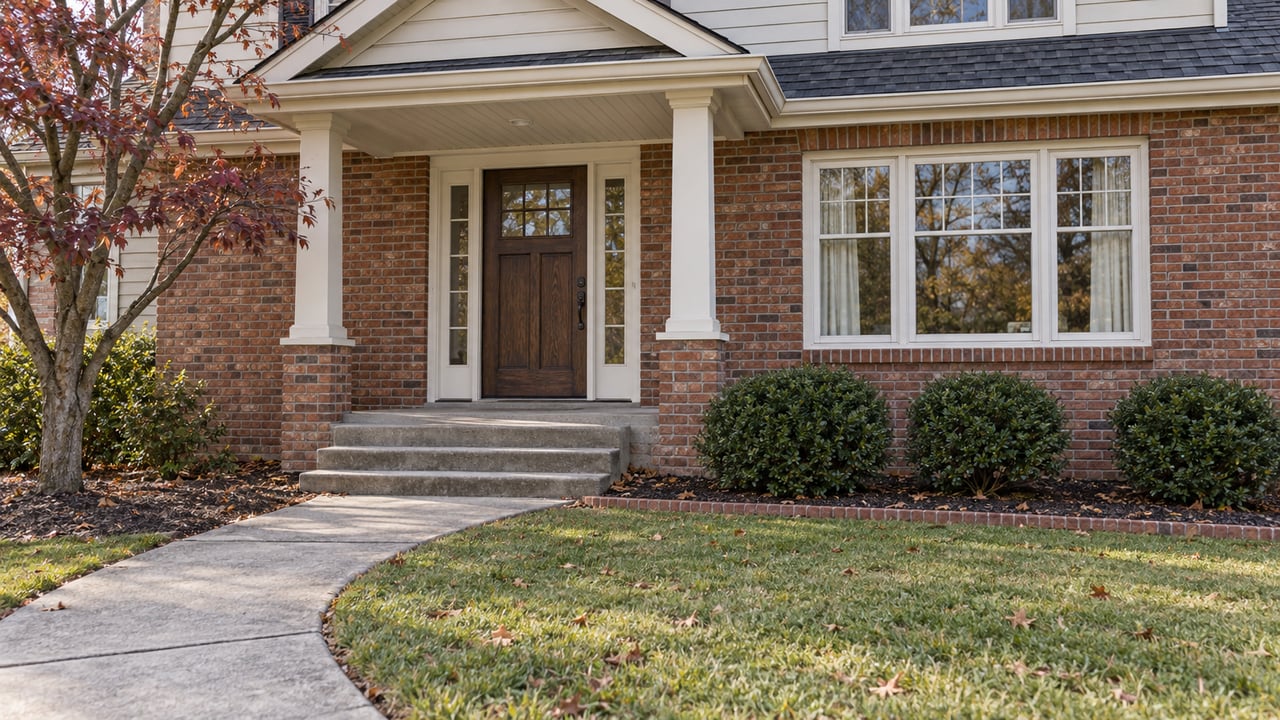
In late March 2026, homeowners in Penn Township's Blackthorne Estates got an email from their own HOA. The golf course running through their neighborhood, closed to the public since 2022, would likely sit closed for another season. Ron Allen, a Blackthorne Drive resident, shared that message with TribLive, and it read like the community's amenity had quietly become permanent scenery instead of a working golf course.
Then, in late June, the same course reopened. Front nine playable Wednesday through Sunday, an 8 a.m. start, last tee time at 6:10 p.m. Back nine still closed, according to TribLive's reporting, with a new clubhouse under construction off Kapalua Lane.
Two dated statements, ninety days apart, saying opposite things about the same amenity. That gap is the story. If you're comparing Harrison City to other eastern Pittsburgh suburbs right now, the lesson isn't about one golf course. It's about what a listing's amenity language actually promises you, and what it doesn't.
What Blackthorne Was Zoned to Be
Blackthorne Estates sits off Harrison City-Export Road in Penn Township, part of the Penn-Trafford school district area. The township approved the community's construction back in 1993, zoned for 222 single-family homes, 41 carriage homes, and 196 manor home units spread across roughly 300 acres, built around an 18-hole course and a clubhouse.
That's the pitch buyers signed up for. Homes overlooking fairways. A club at the center of the neighborhood. The kind of amenity that lets a listing agent add a line to the description.
"We worked all our lives for this."
Maureen Brusca said that to TribLive in 2023, describing why she and her husband moved to Blackthorne hoping to retire near a golf course. By then the clubhouse had already been closed to the community for months, run instead as a private wedding venue, and the course itself hadn't opened for the season. Another resident raised a different concern at the same township meeting: traffic from a proposed new golf facility.
The residents' comments raise a practical question for buyers: who owns and operates a community amenity, and how is access handled?
Four Years Between a Course Closing and a Partial Reopening
Here's the timeline as it's been reported, piece by piece, since 2022.
| When | What happened |
|---|---|
| November 2022 | The Club at Blackthorne, owned at the time by Jeannine Schemm, closes to the community and starts operating as a private event and wedding venue instead. |
| 2023 season | The golf course does not open to the public. Penn Township sues the clubhouse, the golf course, Blackthorne Investors, and Bedrock Developers. |
| March 2024 | Township and Blackthorne Investors reach an agreement to reopen the course, with a new golf facility planned near Kapalua Lane. Spinosa and Kapalua lanes convert to one-way streets with added parking. |
| Late 2025 | Anthony and Leah Cifelli purchase the Club at Blackthorne for $3.9 million, planning a restaurant on the lower level and continued weddings upstairs. |
| Late March 2026 | Blackthorne's HOA emails residents that the golf course likely won't reopen for the 2026 season. |
| June 2026 | The front nine holes reopen to the public. Back nine still closed. New clubhouse construction visible from Kapalua Lane. |
Bob Vucelich, who owns Bedrock Developers and built homes throughout Blackthorne, also owns the golf course itself, a detail worth sitting with. The person selling houses in the community and the person controlling whether the course operates are the same person. That's not necessarily a conflict, but it's exactly the kind of ownership structure a buyer should ask about before assuming an amenity will behave the way the listing photo implies.
Why This Isn't Really About One Golf Course
The specific dispute at Blackthorne will eventually resolve one way or another. What won't change is the practical question for buyers: an amenity-branded community may lead buyers to expect certain features and access, but someone else has to keep delivering them for years. The HOA collects dues. A separate entity may own the clubhouse. Another entity may own the course. None of those parties is contractually required to have the same priorities as the people who bought homes expecting a finished 18 holes.
That's true of golf course communities generally, and it applies just as easily to a neighborhood built around a private pool, a clubhouse, or a shared trail system. Buyers should understand that continued access depends on decisions by people and entities beyond their control.
The Other Number That's Misleading You Right Now
Blackthorne's estate-lot homes also help explain a second thing worth understanding if you're shopping Harrison City on price alone: the neighborhood's median list price is a genuinely unstable number at the moment, because there are so few active listings to average.
As of April 2026, Harrison City's median list price sat around $565,000, with active listings ranging from roughly $400,000 up to $1.495 million. That same month, homes sat on the market for a median of 206 days, unchanged from April 2025. Total active inventory across most portals has hovered in the low teens to low twenties at any given time this year.
Run the math on that. When fewer than twenty homes are on the market, one or two large estate-lot sales inside a community like Blackthorne can swing the median by tens of thousands of dollars in either direction. A buyer glancing at a portal's median price isn't seeing what a typical Harrison City home costs. They're seeing whatever mix of small and large properties happened to be listed that week.
That 206-day median days-on-market figure is its own clue. Homes at the higher end of Harrison City's range, the kind sitting on multi-acre lots or fronting a fairway, tend to move slowly. They sit in inventory for months, weighting the market's averages toward a segment that isn't representative of a typical purchase.
What to Ask Before You Write an Offer in an Amenity Community
If a listing you're considering, in Harrison City or anywhere in the Penn Township area, leans on an amenity as part of its value, a few questions are worth asking before you get attached to the house:
- Who actually owns the amenity, and is that the same entity that manages the HOA?
- Is amenity access included in mandatory HOA dues, or is it a separate optional fee?
- Ask for the last two to three years of HOA meeting minutes. Disputes over amenities almost always show up there before they show up in a newspaper.
- Is there any active or recently settled litigation involving the HOA, the developer, or an amenity operator? A seller's disclosure won't always surface this on its own.
- If the amenity has been closed or limited at any point, get the timeline in writing rather than relying on a verbal assurance that it's "coming back."
None of these questions are about disqualifying a neighborhood. Blackthorne's front nine is playable again as of this summer, and that's a real, positive development for the people who live there. The point is that a buyer who asks these questions going in isn't surprised later, whether the answer is reassuring or not.
A Few Direct Questions
Is the golf course at Blackthorne Estates open to the public right now? As of the most recent reporting in June 2026, the front nine holes are open to the public Wednesday through Sunday, with the back nine still closed while a new clubhouse is under construction.
Does a golf course label always mean a home costs more? Not automatically, but amenity-branded listings in this price range in Harrison City have sold anywhere from the high $300,000s past $1.4 million, so the amenity is one factor among lot size, square footage, and condition, not a fixed premium.
Is Harrison City's median list price a reliable number to plan around? Treat it as a starting point, not a budget. With active inventory running in the low teens to low twenties most months in 2026, a single high-value sale can move the median more than it would in a larger market.
If you're weighing a house in an amenity community against something more straightforward down the road, that's exactly the kind of comparison worth working through with someone who knows the difference between what a listing promises and what the HOA minutes actually say. Katrina Sells Pittsburgh has spent two decades in these Westmoreland County suburbs, and Katrina's construction background means she reads a property's condition and its paperwork with the same eye. Let's talk about your neighborhood. Schedule a free local market consult and get a straight answer before you write an offer, not after.
This article is general information, not legal, tax or financial advice. Consult a qualified professional about your situation.